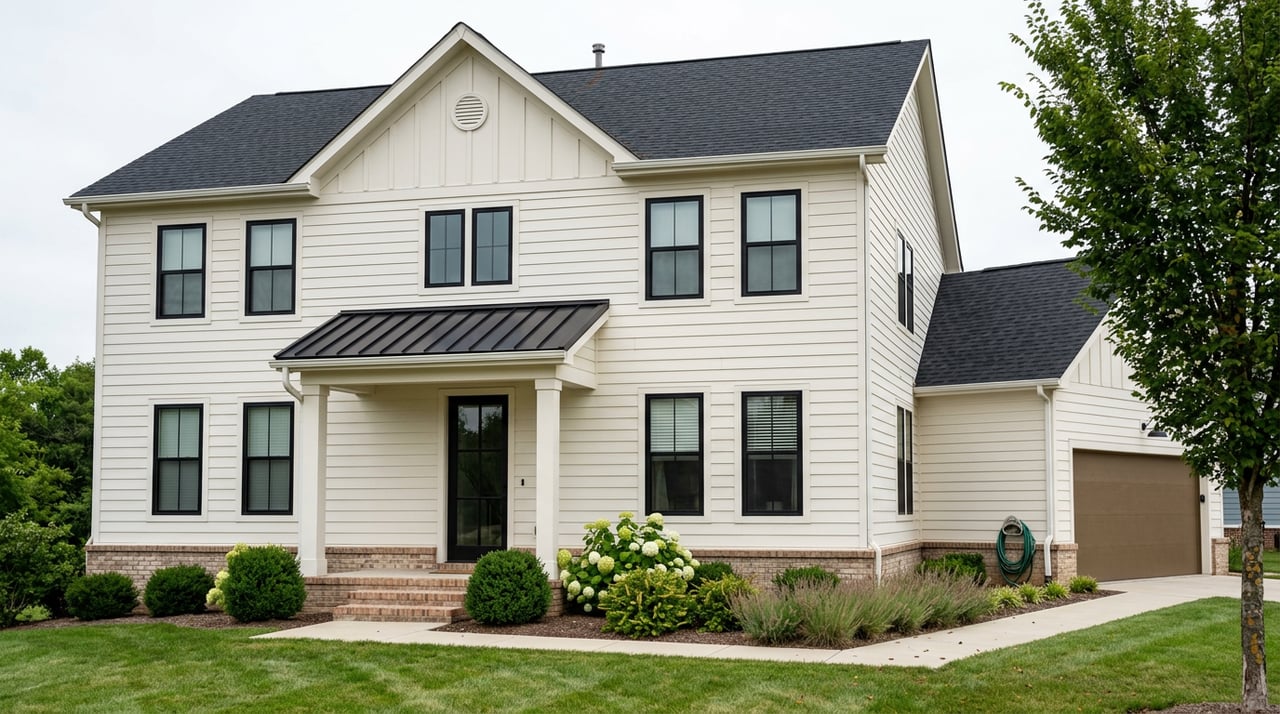
White House's median home price climbed 7 percent year over year as of December 2025. Zillow's home value index for the same town, updated through June 2026, shows values down slightly over the trailing twelve months. Both numbers are accurate. Both come from real transactions. And they are telling two different stories about the same handful of streets north of Nashville.
If you are comparing White House against other towns along the I-65 corridor, that contradiction matters more than either number on its own. A seller who prices a resale home off the "up 7 percent" headline is about to have an uncomfortable few months on the market. A buyer who assumes new construction and resale homes are competing on the same terms is missing where the real savings, and the real risk, actually sit.
The Number Everyone Is Quoting
Redfin's report for December 2025 put White House's median sale price at $396,000, a 7.0 percent increase over the same month the year before. That's the figure that shows up in portal alerts and gets repeated in casual conversation about the market.
Sitting next to it in the same report are two numbers that rarely make it into the conversation. Homes took longer to sell, and fewer of them sold at all.
| Metric (December, year over year) | 2024 | 2025 | Change |
|---|---|---|---|
| Median days on market | 75 | 100 | +33% |
| Homes sold | 69 | 60 | -13% |
A market where prices are rising, sales are slowing, and fewer homes are closing is not describing simple appreciation. It may be describing a shift in what's selling, rather than a change in what any single home is worth.
What Price Per Square Foot Is Trying to Tell You
The clearest evidence sits in a number Redfin reports separately from the median: price per square foot. As of the same report, White House's median sale price per square foot was $199, down 2.7 percent from the year before.
That's the number that resolves the contradiction. Median sale price answers "what did the typical closed deal cost." Price per square foot answers "what does a square foot of housing actually cost here." When the first number rises and the second falls, the figures do not by themselves show that individual homes became more valuable; they may reflect a change in the mix of homes selling. More of what closed last year was bigger, newer construction. Less of it was the kind of modest resale home that used to anchor the local median.
This is the same effect that makes a town's average income look like it jumped when a handful of high earners move in, even though nobody already living there got a raise. The median moved because the population changed, not because each unit got more valuable. Zillow's separate valuation model tries to control for that mix shift by tracking value changes in the same or similar homes over time rather than just averaging whatever happened to sell. That's why its index, at $381,716 as of June 2026, shows White House essentially flat to slightly down over the past year instead of up 7 percent.
Where the Median Is Actually Coming From
White House has several active new-construction communities pulling larger, higher-priced homes into the sales mix:
- The Parks, built by D.R. Horton, marketed around resort-style amenities including a community pool and walking trails
- Legacy Farms, a newer community marketed around its rolling-hills setting
- Cambria, built by Norfleet Builders, an established subdivision originally designed in 2002 by local developer Herb Lord, with lots ranging from a quarter to a half acre
- Dorris Farm, marketed toward first-time buyers and luxury buyers alike
- Calista Farms, a newer community offering a range of floor plans aimed at buyers relocating to the area
Cambria is worth pausing on. It isn't a brand-new subdivision chasing this year's buyer. It has been selling lots for more than two decades and was, as of this summer, still delivering new homes, including a 2,404-square-foot, four-bedroom farmhouse plan priced at $534,990 and targeted for completion this August. When an established, well-regarded builder is still actively closing homes at that price point alongside a wave of newer communities, it tells you the upward pull on the median isn't a one-time blip from a single hot development. It's broad enough across builders to move the whole town's number.
How Builder Financing Affects Sale-Price Comparisons
Here's the part that matters most if you're pricing a resale home against these communities. Builders aren't just selling square footage. They're selling financing.
D.R. Horton is currently advertising a special financing incentive at The Parks for buyers who sign a contract between June 26 and September 30, 2026, offered through its in-house lender. Earlier this summer, one White House new-construction listing advertised a 3.99 percent interest rate for buyers who closed by mid-July. Other listings active in July 2026 offered $5,000 to $10,000 in closing-cost credits for buyers who financed through the builder's preferred lender, and at least one offered a 1 percent rate buydown stacked with a 1 percent lender credit on the same loan.
These incentives may not show up as a lower sale price. The home may still close at its full list price, or close to it, because the builder is subsidizing the buyer's cost of borrowing rather than discounting the home itself. That closed price then becomes a comp. The reported price of a $400,000 sale alone does not show whether the buyer's effective monthly cost was closer to what a $370,000 home would carry at a normal rate. A resale seller down the street should consider any financing incentive associated with that sale when the information is available.
Two Different Clocks
By July 2026, Redfin's snapshot of new construction in White House showed a median listing price of $405,000 across 107 active new homes, with a typical time on market of just 58 days. That's roughly half the 100 days the broader market, weighted more heavily toward resale, was running at the end of 2025.
New-construction listings had a shorter typical time on market in the July 2026 snapshot than the broader-market figure reported for the end of 2025. These figures describe different periods and market segments, so they do not by themselves explain the difference. A resale listing that sits for 90 or 100 days isn't necessarily overpriced relative to last year; the comparison should account for the market segment and reporting period.
What This Means If You're Selling a Resale Home Here
- Anchor your pricing conversation to price per square foot, not the median. The median is telling you about a different pool of homes than the one yours belongs to.
- Ask what financing the comparable new-construction sales actually used. A closed price backed by a builder rate buydown isn't a like-for-like comparison to a conventional resale sale.
- Budget for a longer runway. If the broader market moved from 75 to 100 days on market in a single year, pricing a resale home to sell in three weeks is planning against last year's market, not this one.
What This Means If You're Buying
If you're cross-shopping a new-construction community against an existing home, run the comparison on total monthly cost after any builder-paid rate buydown or closing credit, not on sticker price alone. A resale home listed $20,000 below a comparable new build can still be the better deal, or the worse one, depending entirely on what rate you'd actually qualify for on each. The sticker price tells you almost nothing on its own.
A Few Common Questions
Does this mean White House home values are actually falling? Not exactly. Zillow's index shows values close to flat, down about 0.7 percent over the past year as of June 2026. That's a modest cooling, not a decline in the way a falling median might suggest at first glance.
Should a seller wait for prices to catch up to the median? The median isn't a target resale sellers are behind on. It's an artifact of what's currently closing. Waiting for it to "catch up" assumes it reflects existing homes, when the data suggests it largely reflects new ones.
Is new construction actually a better deal after incentives? It depends on the specific incentive and your own financing situation. The only way to know is to price out the effective monthly cost of a new-construction incentive against a conventional resale purchase at current market rates, not to compare list prices side by side.
If you're trying to figure out what a specific White House listing, new or resale, actually means for your monthly payment and your timeline, that's exactly the kind of comparison worth walking through with someone who watches this market closely. Jetton Real Estate works both sides of these deals across Middle Tennessee, and can help you read a listing for what it actually costs, not just what it's priced at. Contact us when you're ready to look closer.